
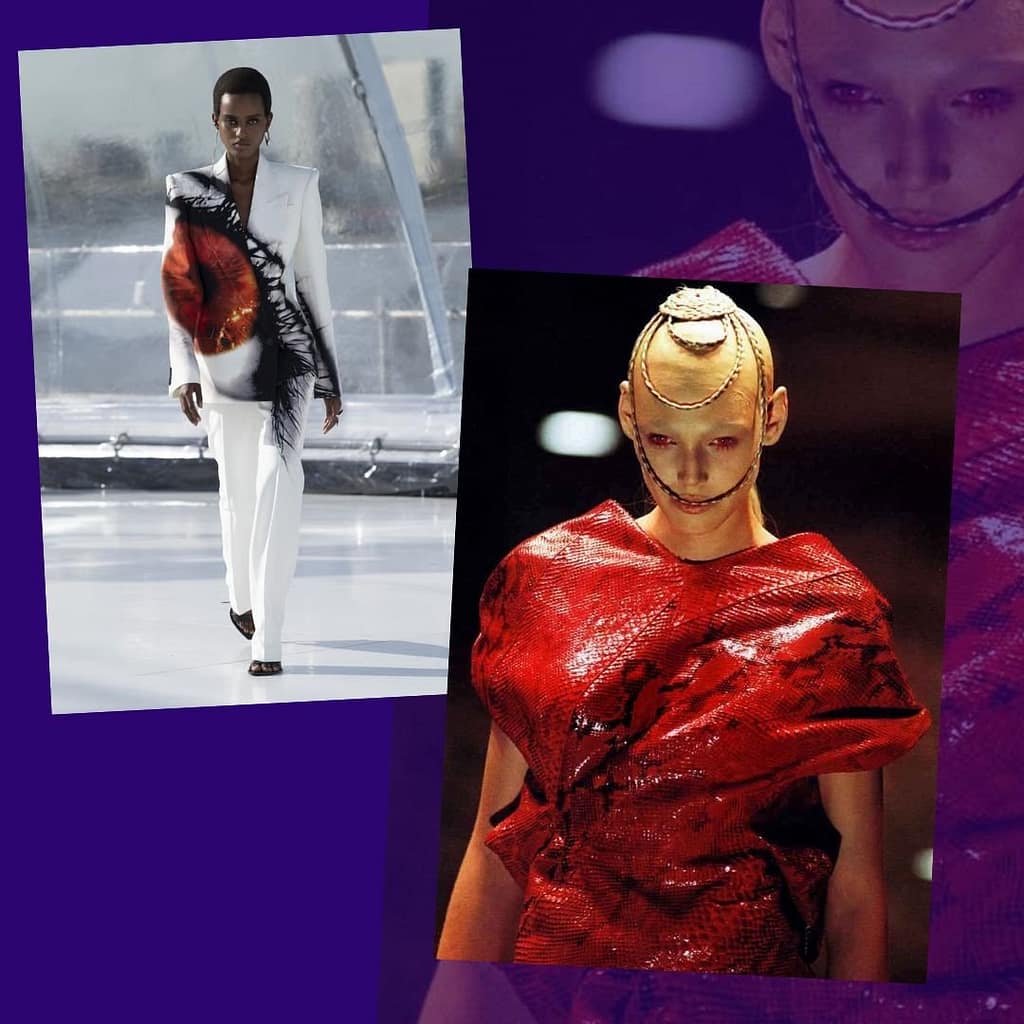
Alexander McQueen: How He Turned Emotions Into Fashion
London, 1995. Models walk the runway in torn lace. Red paint stains their skin. Their faces look shaken, almost frightened. The room goes silent.
This is Highland Rape. It is one of the most controversial shows in fashion history. Critics call it violent. Journalists call it offensive. But it changes fashion forever.
Alexander McQueen just proved something powerful. Clothes can carry emotion. Clothes can carry fear.
Fashion Built on Discomfort, Not Comfort
Alexander McQueen never wanted his audience to feel relaxed. He wanted them to feel something raw. Something real.
Highland Rape was not about violence against women. It was about the historical destruction of Scotland by England. It reflected McQueen’s own family history. But the audience did not read the history. They felt the emotion. They felt fear first.
This became his signature method. He built entire collections around the viewer’s nervous system, not just the models’ silhouettes. Beauty and anxiety always walked together in his shows.
Why Shock Value Worked So Well
Great storytelling follows one simple rule. First, break the feeling of safety. Then offer something the audience can hold onto.
Alexander McQueen mastered this rule inside fashion.
His 2001 show VOSS is a perfect example. The audience sat around a mirrored box for almost two hours. They saw only their own reflection. No models appeared.
Then the glass shattered. Inside sat a woman, breathing heavily, covered in live moths. The image echoed a real photograph by Joel Peter Witkin, originally taken inside a psychiatric hospital.
Nobody clapped right away. Some people cried. Some felt sick. That single moment became unforgettable, not because the dresses were flawless, though they were, but because the emotion hit first.
Beauty That Feels Dangerous
Alexander McQueen understood something every skilled psychologist knows. Strong emotions create stronger memories than pleasant ones. Fear and shock burn deeper into the brain than calm admiration ever could.
That is why his dresses made from shells, feathers, horsehair, and even bottle caps never felt cute. They felt primal. They triggered something ancient inside the viewer, a quiet fear of nature, decay, and mortality.
In that moment, clothing stopped being fabric. It became a mirror.
A Final Show That Felt Like a Warning
Plato’s Atlantis, shown in spring 2010, became Alexander McQueen’s final complete collection before his death. Models walked in reptile-like digital prints. Screens behind them showed a hypnotic underwater world consuming humanity through climate change.
The shoes alone were so extreme that critics called them weapons instead of footwear.
Days after the show, McQueen explained the concept. Humans might evolve backward into the ocean if they keep destroying the land. It was an apocalypse, staged as high fashion.
Months later, Alexander McQueen was gone.
People who witnessed that show in person still describe the same feeling. They felt warned. Not about fashion. About something much bigger.
Why This Still Works Today
Modern fashion often chases comfort, positivity, and safe aesthetics. Alexander McQueen represented the opposite of that trend. That is exactly why his work still feels alive today.
He proved a simple truth. People remember discomfort more than calm approval.
Every brand that leans into provocation today follows his blueprint. Every campaign built on fear of missing out uses his emotional formula. Every collection promising transformation through pain owes something to Alexander McQueen.
He never sold dresses. He sold a feeling. A state the viewer had to enter just to feel truly alive…