
12 Million Views: When Your Body Stops Feeling Like Yours
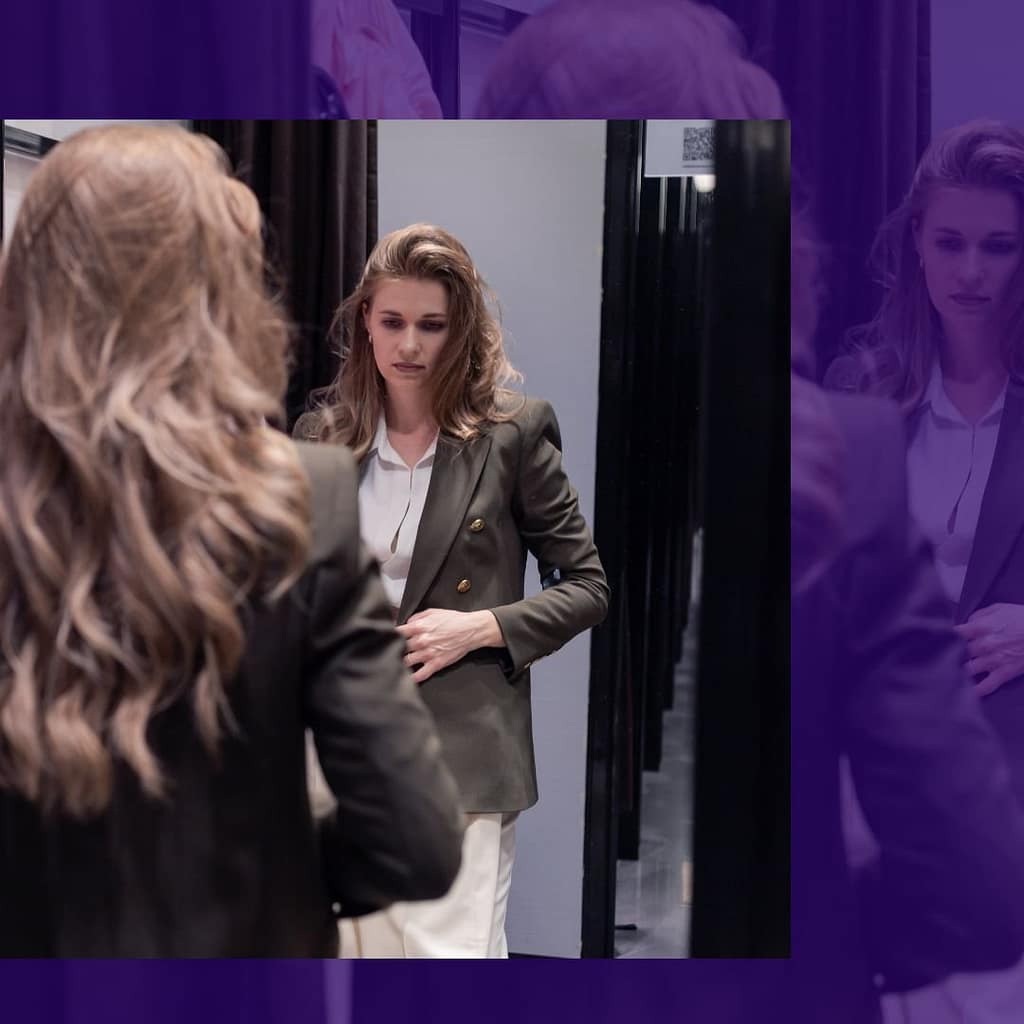
Grace stood in front of the fitting room mirror. She did not recognize herself. Not because the mirror was distorted. Because it was too honest.
She was twenty-nine. Every morning, before coffee, before her eyes were fully open, she scrolled her feed. And every morning the feed showed her what this week’s body was supposed to look like. Shoulders a little wider. Waist a little narrower. Skin with no visible pores. Eyes with no trace of a bad night’s sleep.
She did not choose these standards. An algorithm did.
A job that used to mean something different
Three years ago, Grace worked as a stylist in a small studio. She helped clients find clothes that made their bodies feel at home. Back then, fashion still felt like a language for talking about yourself.
Then something changed. Not overnight. Slowly, the way light fades in a room at dusk. You do not notice the exact moment it gets dark.
Clients stopped asking “what suits me.” They started arriving with a photo from their phone and asking “how do I look like this.” The photo was not a person. It was a silhouette built from a thousand borrowed faces. Filtered. Smoothed. Reduced to a shape with no living asymmetry left in it.
The client who brought a list
Grace remembers one client, Olivia. Olivia brought a list. Cheekbones. Jawline. Hip curve. Leg length, measured against a specific ratio to height. The list came from a video that hit twelve million views in one night.
Olivia cried in the fitting room. Her own body, warm and breathing and real, did not match the numbers on that list.
That was when Grace understood something important. In fashion today, the body is no longer measured against itself. It is measured against a trend that lives for a week, then disappears, leaving behind people still trying to fit into it.
The industry stopped asking the right question
The industry stopped asking the body what feels comfortable. Now it asks the algorithm what is working right now. And the body complies, because it is tired of being the exception to rules it never wrote.
Grace changed her work. Now she writes about fashion differently. She tells the story of a dress through how it lets you breathe, not through how it hides your flaws. She photographs hands with scars. Stomachs after childbirth. Skin that remembers sun and years. Not because it is trendy. Because it is true.
An article called “I’m tired”
Her first piece in this new format had a simple title: “I’m Tired of Being a Version of Myself for Someone Else’s Screen.” The comments did not come right away. When they did, they carried relief. Women wrote that for the first time in a long time, their body felt like their own. Not the feed’s. Not the algorithm’s.
The line Grace writes from now
Fashion used to be a way to tell the world who you are. Too often now, it becomes a way to turn into whoever the trend wants to see. That thin line between the two is exactly where Grace builds every story she writes now.
The body does not have to be a trend.
It has to be alive.