
Silk Road Fashion: The First Global Fashion Industry
Silk Road Fashion: The First Global Fashion Industry
Silk Road fashion was the first truly global fashion industry. Today we think of runways and viral trends. But it all began two thousand years ago. Caravans were its engine. Soft, shiny, almost weightless fabric was its currency.
The Secret Behind Silk Road Fashion
China kept the secret of silk for about three thousand years. Smuggling silkworms was punishable by death. Meanwhile, Rome was obsessed with the fabric. According to legend, Emperor Aurelian refused to buy his wife a silk dress. It cost as much as its weight in gold. The philosopher Seneca complained too. In his view, women wore clothes that hid nothing. So arguments about revealing outfits are older than we think.
In the end, the secret was stolen. In the sixth century, two monks worked for Emperor Justinian. They carried silkworm eggs out of China inside hollow staffs. As a result, Byzantium launched its own silk production. European fashion changed forever.
Persian Patterns Conquered the World
Caravans carried more than fabric. They also carried designs. Persian weavers made round medallions with birds, lions, and pearl borders. Byzantium copied these patterns. Then Europe did the same. People wrapped sacred relics in them. Kings wore them.
The boteh motif came from the same tradition. It is a teardrop with a curved tip. Today we call it paisley. It outlived empires and many eras. Even now it appears on scarves, shirts, and luxury collections.
Fashion Traveled in Both Directions
We often think the West learned from the East. In fact, the exchange went both ways. In Tang dynasty China, women loved Persian and Sogdian clothing. They wore fitted caftans with wide lapels, narrow sleeves, and riding boots. Historians call this trend hu fu, which means foreign dress. Court ladies copied the look of caravan traders. We do the same today with street style.
Purple, Power, and the Silk Road Style We Wear Today
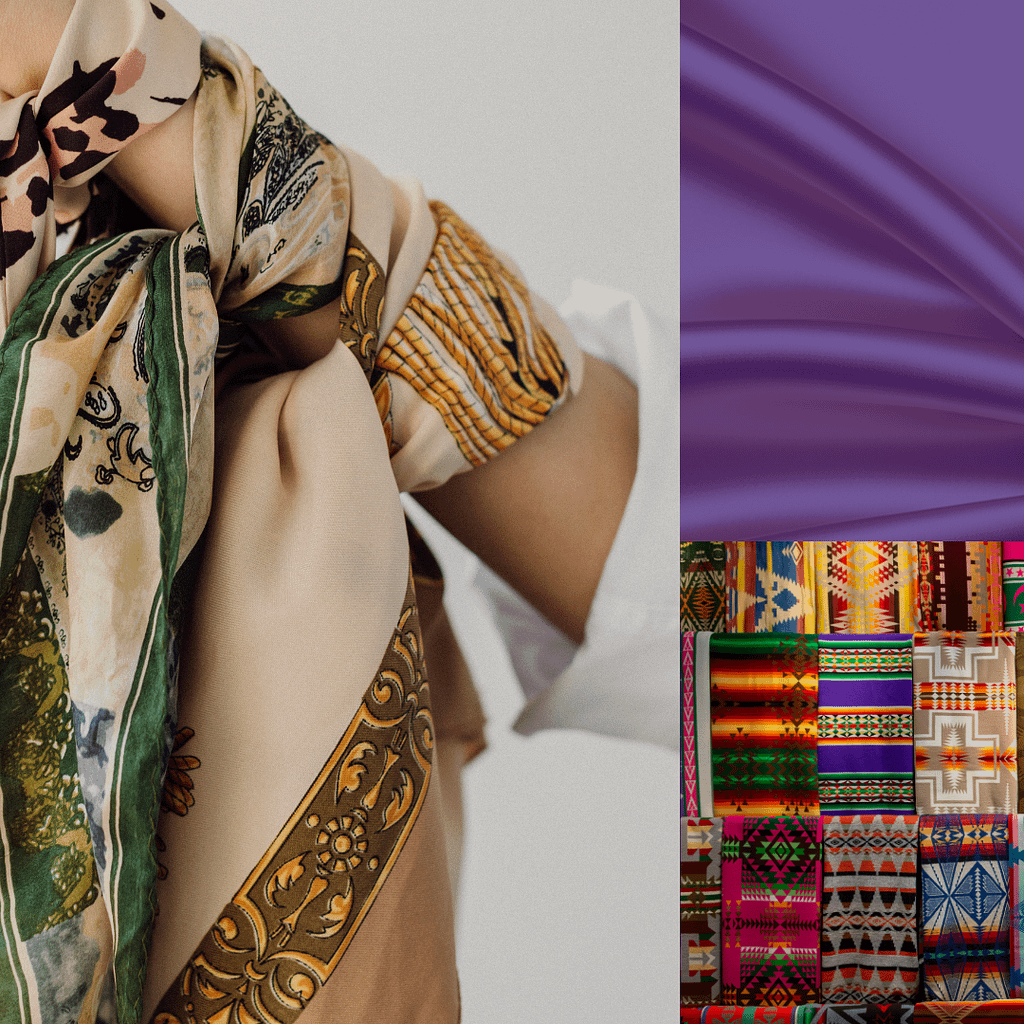
On the Silk Road, fabric was a language of power. Only the emperor could wear Byzantine purple. Even heirs born in the porphyry chamber had a special title. They were called porphyrogenitus. Color, weight, density, and pattern showed who stood before you. It was a real luxury system. And it existed long before logos.
Now look at modern collections. You will see silk scarves inspired by Byzantine richness. You will see kimono jackets and wide trousers. Ikat, Eastern embroidery, dragons, and floral prints appear on evening gowns. Designers have used these motifs for decades. Exhibitions about China’s influence on fashion draw record crowds.
Silk Road fashion proved one simple thing. Style is born where cultures meet. Once ideas get a road, they travel on their own.
So next time you put on a silk blouse, remember this. You are wearing two thousand years of history.